Texas Execution Information Center

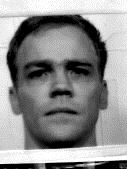
Richard Jones

Richard Wayne Jones, 40, was executed by lethal injection on 22 August in Huntsville, Texas for the murder of a 27-year-old woman.

On 19 February 1986, Tammy Livingston was abducted from a parking lot in the Fort Worth area. A few hours later, her body was discovered by firefighters called to a grass fire. She had been stabbed more than a dozen times, one wound slashing her carotid artery. The day after the murder, Yelena Comalander was arrested trying to pass one of Livingston's checks at a Fort Worth grocery store. She told police that her boyfriend, Richard Jones, had given her the checks. At the time, Comalander, 18, was pregnant with Jones' child.

Jones, then 26, was arrested at his home the following day. Police confiscated the clothes he had been wearing the day of the killing. They found two small spots of blood on the left leg of his jeans, which matched Livingston. Jones' fingerprint was found inside the victim's car, and he confessed to the killing to police.

Jones had been previously convicted of burglary of a habitation and three counts of larceny. He began serving concurrent 5-year and 7-year sentences in February 1979. He was paroled in August 1981. In September 1983, he was convicted of aggravated robbery with a deadly weapon and received another 7-year sentence. He was paroled again in October 1985. (During this time frame, the Texas prison system was under the supervision of U.S. District Judge William Wayne Justice, whose strict prison population caps forced the state to release offenders early.) Jones had been on parole for about 4½ months when Livingston was killed.

At his trial, Jones said he had nothing to do with Livingston's murder. He said that the checks had come from Walter Sellers, a friend of his sister, Brenda. He claimed that his confession to police was coerced -- that they told him his girlfriend would be executed and their child would be taken by the state unless he confessed. A police officer acknowledged telling Jones this, but the next day, he recanted this testimony, saying that he wasn't paying attention to the question. Jones could not explain the blood on his jeans, and an eyewitness identified him as the person who abducted Livingston from the parking lot. This, plus the fingerprint and his confession, persuaded the jury to return a guilty verdict.

In July 1993, Jones was scheduled to be executed. Four days before his execution date, he wrote a letter from death row explaining his account of the day Livingston was killed. According to Jones, he spent the day working with his father, then had dinner at home with Comalander. His sister Brenda unexpectedly dropped by as he was getting ready for bed and asked for a ride to a friend's house. On the way, she began crying and told him that she and Sellers had robbed and killed two people. When they arrived, he asked Sellers, "You killed them?" and he answered "Yes we did." Brenda cried some more, saying they needed to bury the bodies and they needed his help because he was the only person they could trust. Sellers showed Jones where Livingston's body was dumped and gave him the victim's possessions in return for his help. Later, Jones returned, doused the area with gasoline, and set it on fire.

Jones wrote that he deserved to be punished, but not for murder. He also wrote that he didn't believe Brenda killed Tammy Livingston. "It's my understanding ... that she was just there." However, he also believed that she could keep him from being executed. He wrote that he lied about Tammy Livingston's death to protect his sister. "I was thinking at the time that my sister ... wouldn't let her brother be put to sleep like an old sick dog for something her and her dope-head friend done." A day after writing this letter, Jones received a stay of execution.

Jones' defense team argued that his account explained the evidence better than the prosecution's version. If Jones killed Livingston, they say, there would have been much more blood than two small spots on his pants leg. They say that he got the spots on his jeans from walking through tall grass that had been splattered with blood. Further, they argue that the eyewitness who tied Jones to Livingston's abduction gave a conflicting physical description -- she described the suspect as clean-shaven, yet Jones had a moustache when she picked him out of the lineup.

In the years since the killing, five people have given statements that support Jones' version of events. Scott Christian said Sellers tried to sell him credit cards and checks and that he "had blood splatters on his T-shirt, and on his hands and forearms." Christian was called to testify at Jones' trial, but as a local drug figure, he invoked his Fifth Amendment protection against self-incrimination and did not testify.

James Richard King said he saw Sellers in a bloody shirt wanting to sell checks in early 1986. Douglas Wayne Daffern said he saw Sellers with credit cards and checks bearing the name Livingston. King and Daffern, two more drug associates of Sellers, were both called to testify, but could not be found.

Terry L. Gravelle related a conversation he had with Sellers in jail, where Sellers said that Jones was innocent and chuckled about his conviction. He said that Sellers told him "there was a problem using the stolen checks or cards" and that he subsequently gave them to Jones. Finally, Robert Dean Miller, another jailmate of Sellers, said that he told him Jones was innocent. Gravelle and Miller were not discovered until after Jones was convicted.

In a recent death-row interview, Jones said that his claim of innocence would have been believed if not for his past convictions. "My past haunted me," Jones said. "That's what hurt most."

A week before Jones' execution, a state district judge refused to halt it. His defense lawyers failed to persuade officials to delay his execution so DNA tests could be conducted on crime-scene evidence. The day before his execution, the Texas Court of Criminal Appeals and the U.S. Supreme Court rejected Jones' appeals. His request for a stay was denied by the Texas Board of Pardons and Paroles, and Lt. Gov. Rick Perry, responsible for handling the case with Gov. George W. Bush out of the state, declined to issue an emergency stay.

At his execution, Jones said, "I want the victim's family to know that I didn't commit this crime." Turning to Tammy Livingston's relatives, he said, "I didn't kill your loved one." He told the prosecutor, "Sharon Wilson, y'all convicted and innocent man and you know it. There are some lawyers hired that is gonna prove that, and I hope you can live with it." He then expressed love to his family. He was pronounced dead at 6:19 p.m.

Yelena Comalander was convicted of forgery and perjury in 1987 and was put on 8 years' probation.

Walter Sellers, now 52, has been in and out of custody on a variety of theft, fraud, and drug charges since the murder. He is currently serving a federal sentence for mail theft. He denies any role in Livingston's murder.

Brenda Jones was on probation for a drug conviction at the time of the murder. She also has denied any role in the slaying. Regarding her brothers' claims that she had knowledge that could have saved his life, she has refused to comment.


By David Carson. Posted on 23 August 2000.
Sources: Texas Department of Criminal Justice, Associated Press, Dallas Morning News.