
Execution Report: Jermarr Arnold
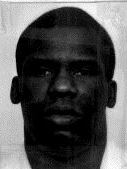
Jermarr Arnold
Executed on 16 January 2002
Jermarr Carlos Arnold, 43, was executed by lethal injection on 16 January in Huntsville, Texas for the murder of a store employee during a robbery.
On 15 July 1983, a gunman robbed the Greenberg Jewelry store in Corpus Christi. The clerk, Christine Sanchez, was killed by one shot to the head. Investigators found an eyewitness, Joe Morano, who said he had a short conversation with a man in the jewelry store between 10:30 and 11:00 on 15 July. What little other evidence the police had pointed to a transient named Troy Alexander. Lacking any other leads, the police were unable to carry the investigation of the case any further and the case lay unsolved for five years.
In 1988, the Nueces county district attorney received a letter from an inmate in a California prison who claimed to have information about the Greenberg Jewelry robbery/murder and Troy Alexander. The same man, Jermarr Arnold, also wrote several letters to the Corpus Christi newspaper about the crime.
Jermarr Arnold had been convicted in California in February 1984 for bank robbery and was sentenced to five years in prison. While in prison, he was convicted of possession of a deadly weapon (1985), two counts of assault with a deadly weapon (1986), possession of a concealed weapon (1988), three counts of assault (1988), another count of possession of a deadly weapon (1990), and aggravated assault (1990). His original sentence of five years was extended because of these other convictions.
In September 1988, Texas Rangers interviewed Arnold in California. Arnold confessed to the Greenberg Jewelry robbery and the murder of Christine Sanchez. He said that he had monitored the store for several days. On the day of the robbery, he watched the store as it opened for business. After the owner/manager left, he went into the store and told the clerk that he was interested in buying a ring. He said that a "young, Spanish" man came into the store and left after five or ten minutes. At that point, Arnold brandished a .32-caliber revolver and told Sanchez that he was robbing the store. On his orders, Sanchez filled a bag with jewelry from the display cases. Arnold then told her that he wanted cash. Sanchez then opened a drawer and pulled out a gun. Arnold wrestled Sanchez's gun from her and shot her in the head with it. He then fled the scene in a car he had stolen several days earlier. After that, he abandoned the car and rode a bus to San Antonio, using a ticket he bought under the name Troy Alexander. He eventually went to Los Angeles and was arrested there for an unrelated robbery.
Investigators believed that Arnold knew details about the case that could only be known by someone who was there. For example, he correctly described the color of the dress Christine Sanchez was wearing. Also, back in Corpus Christi, Joe Morano identified a photo of Arnold as the man he had seen in the Greenberg Jewelry store on 15 July 1983.
Arnold was brought to Texas to stand trial. While he was awaiting trial in county jail, he injured a cellmate with a ball point pen.
At his trial, Arnold insisted, often loudly, on directing his own defense, over the objections of his lawyer. For example, he demanded that law enforcement employees and death penalty supporters be put on his jury, he would not allow prosecution witnesses to be cross-examined, and he insisted on taking the witness stand. He testified that he committed the murder and urged the jury to sentence him to death. "If [my life is] not taken at this point - if you miss this opportunity - there's a good chance that I will kill again. That's just the way I am." In December 1990, a jury found him guilty of capital murder and sentenced him to death. His conviction and sentence were upheld by the Texas Court of Criminal Appeals in November 1993, in the automatic appeal that is required by Texas law for all cases that carry a death sentence.
Arnold's criminal history went as far back as 1977, when he was sent to prison for rape in Colorado. Also in Colorado, he was diagnosed with acute schizophrenia. In 1983, he escaped from the hospital and embarked on a crime spree through Texas, Las Vegas, and southern California.
While on death row, Arnold wrote numerous letters to news agencies and anti-death-penalty organizations. His early letters, such as one featured on "60 Minutes" in 1991, reaffirmed the stance he took at his trial, which was that he was guilty, dangerous, and deserved to be executed.
Some time during his first few years on death row, however, Arnold apparently reconsidered his position. In October 1994, he filed a petition to the U.S. Supreme Court, which was denied. He filed at least six more petitions in state and federal court, all of which were denied. The basis of his appeals was that he was denied effective counsel at trial, because his lawyer let him override his advice and let him direct his own defense.
While these appeals were being considered, Arnold killed another prisoner on death row. In April 1995, Arnold and fellow inmate Maurice Andrews were involved in a fight that was observed by about a dozen other death row inmates. Andrews was unarmed. Prison videotape showed Arnold stabbing Andrews in the temple with a sharpened bolt, then picking him up and slamming him horizontally into his knee, snapping his spine. He stomped on the bolt, imbedding it deeper in Andrews' head. Finally, he danced in celebration over Andrews' body. Prosecutors were not planning to try the already-condemned killer for the crime, but at his own insistence, Arnold was put on trial in October 1998. (Information concerning the outcome of that trial was unavailable.)
Arnold kept up his letter-writing activities throughout his stay on death row. In a July 2001 letter to the Socialist Worker, he wrote, "in a month or two when they give me a date, I might be next, since tragically and unbelievably, Texas' governor [Rick Perry] just vetoed legislation banning the execution of the mentally retarded."
Continued on Page 2