|
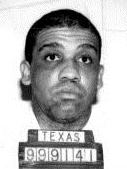
Napoleon Beazley
Napoleon Beazley, 25, was executed by lethal injection on 28 May in
Huntsville, Texas for the murder of a man he and two others carjacked.
In April, Beazley, then 17, borrowed his mother's car and drove with
two other youths to Tyler, Texas. Beazley's friend, Cedric Coleman,
drove, and Cedric's younger brother, Donald, went with them. They saw
a Mercedes in a restaurant parking lot. Beazley jumped out of his car,
armed with a .45-caliber pistol, and approached the driver of the
Mercedes. The man entered the restaurant, apparently without noticing
Beazley.
Beazley got back in the car and the group began driving back home.
However, according to trial testimony, Beazley told Cedric Coleman to
turn back so he could shoot the driver and steal the Mercedes.
Coleman pulled the car over and told Beazley he would have to do his
own driving, so Beazley took the wheel.
As the group approached Tyler for the second time, Beazley spotted a
1987 Mercedes Benz. Beazley followed the car until it pulled into the
garage of a house. He then got out of his car and ran to the driver's
side of the Mercedes. He fired one round from his .45, hitting John E.
Luttig, 63, in the head. He then ran around to the passenger's side,
where Bobbie Luttig was getting out of the vehicle. He fired at her
and, though he missed, she fell to the ground. Beazley then returned
to Mr. Luttig, saw that he was still alive in the driver's seat, and
fired again at his head at close range.
While Beazley was looking for the keys, he asked Donald Coleman, who
was carrying Beazley's sawed-off shotgun, whether Mrs. Luttig was
dead. When Donald said she was still moving, Beazley shouted for him
to shoot her, but he refused. Beazley then began to come around to
shoot her, but Donald quickly changed his statement and said that she
was dead.
Once Beazley found the keys, he backed the car out of the garage.
However, he hit a wall, damaging the vehicle. He abandoned it a short
distance away, rejoined the Coleman brothers in his mother's car, and
the group returned home.
They were arrested more than 45 days later.
Cedric Coleman, Donald Coleman, and Bobbie Luttig testified against
Beazley at his trial. A jury found him guilty of capital murder in
March 1995 and sentenced him to death. The Texas Court of Criminal
Appeals affirmed the conviction and death sentence in February 1997.
Beazley received an evidentiary hearing for his state habeas corpus
appeal in September 1997. That appeal was later denied, as were all
of his subsequent appeals in state and federal court.
Cedric and Donald Coleman pleaded guilty to capital murder and
received life sentences. They were also convicted of carjacking in
federal court and are currently serving time in federal prison.
After the trial, the Coleman brothers recanted some of their
testimony, claiming they were manipulated by Smith County prosecutor
David Dobbs. "Dobbs actually threatened me by telling me if I didn't
testify the way he wanted that he would make sure my brother got the
death penalty," Cedric Coleman stated in an affidavit in July 2001.
This matter was not raised in Beazley's original state habeas corpus
appeal. Beazley's lawyer, Walter Long, also raised some objections
regarding the fairness of Beazley's trial, such as the fact that his
jury was all-white, while he was black, and concerns that the victim's
son, who is a federal judge, might have meddled in the case. Long
argued that Beazley's former lawyer was incompetent for not making
these objections during the case's habeas corpus stage.
Beazley was originally scheduled to be executed on 15 August 2001.
The U.S. Supreme Court denied his final appeal, and the Texas Board of
Pardons and Paroles rejected his clemency appeal by a 10-6 vote.
However, on the morning of his scheduled execution, Beazley won a stay
from the Texas Court of Criminal Appeals.
In April 2002, the Court of Criminal Appeals ruled unfavorably on
another death penalty case dealing with attorney incompetence during
habeas corpus appeals. After making this ruling, the court lifted
Beazley's stay and allowed his execution to be rescheduled.
Beazley's case drew international attention because he was 3½ months
shy of his 18th birthday when he killed John Luttig. Texas is one of
22 states that allows the death penalty for defendants 17 or older,
and the U.S. Supreme Court has upheld such state laws. Nevertheless,
Beazley's lawyers and U.S. and international anti-death-penalty
activists lobbied the governor and the parole board for clemency.
The victim was the father of J. Michael Luttig, a federal appeals
court judge. Three members of the U.S. Supreme Court who have
personal ties with Michael Luttig -- Antonin Scalia, Clarence Thomas,
and David Souter -- removed themselves from Beazley's case whenever it
was before them. In August 2001, the other six members of the court
voted 3-3 to deny a stay to Beazley. On 27 May, when his stay request
came before them for the second time, the vote was 6-0 against.
Legal experts said that none of the three Justices were legally
required to remove themselves from Beazley's case, but they did so to
remove the appearance of bias.
Beazley's own statements regarding his requests for clemency did not
mirror the arguments made by his lawyer and the activists lobbying on
his behalf. He did not claim that he was unfairly convicted or
sentenced or that he did not deserve death because he was only 17 when
he committed the crime. "I don't like to give ... explanations or
excuses," he said from death row. "Whether I was 15, 16, 17, 21, 25,
it should never have happened." Instead, he said that he was
remorseful for what he had done, was a changed person, and was no
longer a threat to anyone. "It's my fault," he said in a court
hearing in April. "I violated the law. I violated this city, and I
violated a family ... I'm sorry. I wish I had a second chance to make
up for it."
When Beazley killed Luttig, he was from an upper-middle class family,
was a star athlete at his high school, and was the president of his
senior class. He had never been arrested, but he had started carrying
guns and dealing drugs. "There is no turning point where I can say I
decided to be bad," he said from death row. It's a process. An acorn
doesn't become an oak tree overnight." A model prisoner during his
eight years on death row, Beazley said that he was no longer a threat
to anyone and could prove that he had changed.
Beazley said that the fact that people around the world were
supporting him and working to prevent his execution gave him no
consolation. "I could have the support of the whole world ... but if
Mrs. Luttig and her family wouldn't give me [forgiveness], it would be
for nothing."
Smith County District Attorney Jack Skeen, whose office prosecuted
Beazley, said that Beazley's actions following the crime showed a lack
of remorse. Skeen pointed out that Beazley avoided arrest for 45
days, attempted to hide the murder weapon, and lied to police about
his involvement in the murder. He did not apologize to the Luttig
family until his execution date drew near and his clemency requests
were being prepared, prosecutors said.
On the day of his execution, the Texas Board of Pardons and Paroles
voted 10-7 against commuting Beazley's sentence to life in prison.
Governor Rick Perry declined to grant an emergency 30-day stay.
At his execution, the warden asked Beazley if he wanted to make a last
statement. Beazley turned his head towards Suzanne Luttig, the
victim's daughter, paused, and said "no." He shook his head, said,
"no" again, and then turned his head to face the ceiling. He was
pronounced dead at 6:17 p.m.
In a statement released to the media after his execution, Beazley
apologized again for his "senseless" crime, but also criticized the
Texas criminal justice system for not giving him a second chance.

By David Carson. Posted on 29 May 2002.
Sources: Texas Department of Criminal Justice, Texas Attorney
General's office, Associated Press, Houston Chronicle, Tyler Morning Telegraph.
|