
Execution Report: Robert Coulson
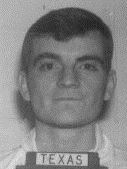
Robert Coulson
Executed on 25 June 2002
Robert Otis Coulson, 34, was executed by lethal injection on 25 June in Huntsville, Texas for the murder of five family members for money.
On a Friday afternoon in November 1992, while extinguishing a house fire, firefighters found the bodies of two men and three women -- Otis and Mary Coulson, 66 and 54; their daughters, Sarah and Robin, 21 and 25; and Robin's husband, Richard Wentworth, 27. All five family members were bound with plastic zip cords and had plastic trash bags over their heads, taped tightly around their necks. Richard and Robin Wentworth had been beaten on the head and died of asphyxiation before the fire started. (Robin Wentworth was also six months pregnant.) The other three victims suffocated while the fire was burning.
There were two family members who were not killed that day. One was Sarah's newborn baby, who she had given up for adoption. The other was the Coulsons' other child, Robert. The Coulsons had no natural children. They adopted Sarah when she was a baby and Robert and Robin, who were brother and sister, at the ages of 5 and 4, respectively.
Investigators on the scene were advised by neighbors to check out the surviving son, Robert, then 24. "If Bob isn't in there, he did it," one neighbor told Harris County prosecutor Chuck Rosenthal. Investigators took a statement from Robert Coulson, who said that he had gone to a lake house with his roommate, Jared Althaus, earlier that day, well before the murders took place. Althaus gave a statement which not only corroborated Coulson's account, but nearly copied it word for word. Rosenthal suspected that Coulson's and Althaus's statements were rehearsed, and they both became suspects.
Under pressure, Althaus told investigators that Coulson committed the murders, with his help. He said that Coulson stood to gain $600,000 from his adoptive parents' estate. He said that Coulson planned the murders for four months, spinning out various scenarios and figuring out how to pull it off. Eventually, Coulson picked a date -- Friday the 13th -- and a method. He decided he would go to his parents' house at a time when only they would be there. The other family members would arrive at later intervals, which he would set up with them beforehand with phone calls. He would lure each victim into a bedroom, subdue him or her with a stun gun, bind them, and then suffocate them. Coulson offered Althaus a cut of the money. Althaus' role was to buy the stun gun and gasoline can with Coulson's money, drop him off near the house and pick him up afterward, and provide him with an alibi.
When he picked up Coulson afterward, Althaus said he told him that the crime didn't go as planned. For one thing, the stun gun didn't work. His mother struggled the most, and he had to smother her with a pillow before binding her. His father was "a wimp" and was no trouble. Next, he went into Sarah's room and told her he was going to tie her up, but that he wouldn't hurt her. Coulson said that as he was restraining her, she thanked him for waiting until after she had her baby. Richard and Robin Wentworth arrived earlier than he had planned; he told them to arrive at 5:00 p.m., but they came while he was still with Sarah. He threatened them with a gun and hit them both with a crowbar more than once to subdue them. After dousing all of the bodies with gasoline, he had intended to remove the bags and restraints to make it appear as though they had all died in the fire, but the fire started spontaneously, presumably from the pilot light on the water heater igniting the gasoline fumes in his parents' room. Coulson lit the other bodies with a match and escaped. Althaus said that Coulson told him all of this as he was driving around and Coulson was throwing evidence out of the window into ditches and culverts. Althaus later took police to some of the ditches and bayous where Coulson discarded some of the evidence, which was recovered.
Investigators continued to collect evidence against Coulson. They found friends who said that Coulson sometimes joked about how he would be financially set if his parents died. Relatives told police that at the funeral, Coulson's sole concern was to settle the estate as soon as possible. Observers at the funeral noticed that Coulson did not shed any tears, and instead, as he was leaving the service, he smiled, snapped his fingers, clapped his hands, and made "a dance step."
Althaus agreed to wear a hidden recording device to a meeting with Coulson at a Houston motel. Coulson made numerous incriminating statements that were recorded on tape, such as "I'm your alibi; you're my alibi." He did not make any direct reference to the murders. He was arrested as he was leaving the motel.
After his arrest, Coulson changed his alibi. He said that he was at a shopping mall at the time of the murders, waiting for his family to meet him at the cafeteria.
Bob Tucker, a neighbor who knew Coulson for twenty years, told police that when he visited Coulson in jail, he never expressed any sorrow over the death of his adoptive family or his natural sister, but he did become "beside himself" with indignation when he learned that Sarah's baby might stand to get half of the estate because he had not been adopted yet.
Continued on Page 2