Texas Execution Information Center

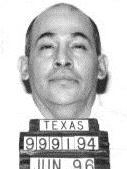
Leonard Rojas

Leonard Uresti Rojas, 52, was executed by lethal injection on 4 December 2002 in Huntsville, Texas for the murder of two people.

Leonard Rojas lived in Alvarado, a small town south of Fort Worth, with his common-law wife, Jo Ann Reed, and his brother, David Rojas. On the morning of 27 December 1994, Leonard Rojas, then 44, was in the kitchen, making coffee, after a night of drinking and using drugs. He saw Reed, 34, slip out of his brother's bedroom. He accused her of sleeping with him, but she denied the accusation. They then went into their bedroom, where she performed oral sex on him. Rojas then shot Reed between the eyes with a .32-caliber handgun. Next, Rojas called for his brother, 43, and shot him three times in the bathroom. Returning to the bedroom, Rojas saw that Reed was still breathing, so he tied a plastic bag over her head and stacked pillows and blankets on her body.

After the killings, Rojas went back to the kitchen and had a cup of coffee. Two people telephoned for Reed. Rojas told them that she was ill and could not come to the phone. Next, unable to find his car keys, Rojas hitchhiked to the bus station in Fort Worth and bought a ticket to Atlanta, Georgia. When he reached Dallas, he confessed to security guards at the bus station. He later confessed to Dallas County sheriff's deputies, including taking them on a videotaped walk-through of the crime scene.

Rojas had previously served three prison sentences for drug offenses. The first was in Germany, where he was stationed while serving in the U.S. Army. In 1976, Rojas was convicted of selling heroin in California. His third prison sentence was for selling cocaine in Nevada in 1990.

A jury convicted Rojas of capital murder in May 1996 and sentenced him to death. The Texas Court of Criminal Appeals affirmed the conviction and sentence in September 1998.

Rojas was originally scheduled for execution in 2000, after his appeals attorney failed to meet a filing deadline. According to the Texas Defender Service, the lawyer, David Chapman, had a mental disorder, had never worked on a capital appeals case before, and had his law license put on probated suspension three times. Chapman disputed the claims that he bungled Rojas' appeal, noting that Rojas gave three confessions to police. "I played a very bad hand as well as I could," Chapman said. "The facts of Mr. Rojas' case were extraordinarily incriminating."

At any rate, a federal judge allowed a new attorney to be appointed, and the usual appeals were then filed on Rojas' behalf. All of them were denied by the courts.

"I'll never regret it. Never," Rojas said of the killings in a death row interview. He said that his brother and wife taunted him all the time. When he confronted her about sleeping with David, she laughed and said, "You can't prove nothing, Leo." Rojas said that he used a .32-caliber gun he got in exchange for cocaine to shoot his wife and his brother. "I just snapped ... I just said, no more abuse from these people." Rojas also claimed that the two were trying to kill him slowly by poisoning his coffee. "These people, they were just basically evil," Rojas said. "They wanted my money, wanted my drugs, and they wanted to do me in." Though Rojas freely admitted his guilt, he also claimed that his court-appointed attorneys were incompetent and he did not get a fair trial.

Rojas declined to make a last statement at his execution. He was pronounced dead at 6:17 p.m.


By David Carson. Posted on 5 December 2002.
Sources: Texas Department of Criminal Justice, Texas Attorney General's office, Associated Press, Houston Chronicle, Huntsville Item.