|
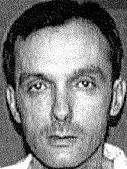
James Colburn
James Blake Colburn, 42, was executed by lethal injection on 26 March
2003 in Huntsville, Texas for the attempted rape and murder of a
56-year-old woman.
On 28 June 1994, Colburn, then 34, was walking in front of his
apartment when he noticed Peggy Murphy hitchhiking. He introduced
himself and invited her into his apartment for a drink. He then
attempted to rape her, and when she resisted, Colburn strangled her
until she stopped breathing. He then stabbed her in the neck with a
steak knife to make sure she was dead.
Following the killing, Colburn went to a neighboring apartment and
asked the residents to call the sheriff's department. After Colburn
was arrested, he gave a videotaped confession. He said that he killed
the woman because he wanted to return to prison.
Colburn had six prior felony convictions from 1977 to 1991. In June
1980, he began serving an 18-year sentence for aggravated robbery and
burglary of a building. He was paroled in January 1987. In April
1990, he began serving a 5-year sentence for arson. He was released
in March 1991. (At the time, early release was common in Texas
because of strict prison population caps imposed by U.S. District
Judge William Wayne Justice.)
Colburn also had a history of mental illness. He began seeing
psychiatrists at age 14, and at 17 was diagnosed as having paranoid
schizophrenia. Dr. Walter Quijano, a psychiatrist testifying for the
state, agreed with this diagnosis, but nevertheless testified at a
competency hearing that Colburn was competent to stand trial and was
sane at the time of the murder. Defense lawyers had another
psychiatrist, Dr. Carmen Petzold, examine their client, but decided
not to use her testimony in court.
A jury convicted Colburn of capital murder in October 1995 and
sentenced him to death. The Texas Court of Criminal Appeals upheld the
conviction and sentence in February 1998.
In his appeals, Col burn's lawyers argued that their client's trial
was unconstitutional because Colburn was heavily medicated with
antipsychotic drugs, rendering him incompetent to stand trial. They
said that their client slept and snored loudly through parts of the
trial, and when he was awake, the medication caused him to appear cold
and unemotional, prejudicing the jury against him. The U.S. Fifth
Circuit Court of Appeals rejected that argument, noting that Colburn's
trial lawyers thought that their client's medicated, blank-eyed state
would lead jurors to believe he was insane, and their decision to
allow him to be tried in that state was a trial tactic that failed.
On death row, Colburn was frequently taken to the psychiatric ward,
including a stay from June through September 2002. His lawyers say he
was placed in treatment because he had been eating his feces and
drinking his urine. They noted that the only way Colburn could be
considered mentally competent was through the administration of
medication. Colburn's death row nickname was "Shaky," because of the
tremors in his hands and body.
"She did nothing to upset me," Colburn said in an October 2002
interview, a week before a prior scheduled execution date. "I was
just in a bad state of mind. I was undergoing bad influences --
voices, illusions -- that were fueling my paranoia." Regarding his
upcoming execution, he said, "all the turmoil -- Satan, the devil --
will be gone. All my past history will be swept under the rug and
I'll turn over a new leaf. I think there's something substantially
good in this."
The day before the scheduled execution, the U.S. Supreme Court voted
7-2 against granting a stay. However, the next day, Colburn's lawyers
entered another appeal at 5:59 p.m., one minute for the execution was
scheduled to begin. It was put on hold while the Supreme Court
considered the appeal. At about 8:00 p.m., the Supreme Court granted
a stay, and Colburn was not executed. In January 2003, however, the
court lifted the stay, and his execution was rescheduled. The Supreme
Court denied Colburn's lawyers' requests for another stay.
"None of this should have happened and now that I'm dying, there is
nothing left to worry about," Colburn said in his last statement. "I
know it was a mistake. I have no one to blame but myself ... I won't
be part of the problem any more." As the lethal injection began
flowing into his body, Colburn said, "It's going to be like passing
out on drugs." He was pronounced dead at 6:21 p.m.

By David Carson. Posted on 27 March 2003.
Sources: Texas Department of Criminal Justice, Texas Attorney General's Office, Associated Press, Huntsville Item, New York Times.
|