|
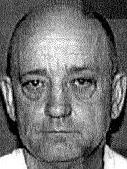
Hilton Crawford
Hilton Lewis Crawford, 64, was executed by lethal injection on 2 July
2003 in Huntsville, Texas for the kidnapping and murder of a
12-year-old boy.
On the evening of 12 September 1995 in Conroe, Crawford, then 56,
placed two phone calls to his friends, Carl and Paulette Everett. He
had invited them to a home business franchise meeting and was calling
to confirm their attendance. Crawford, however, did not show up at the
meeting. Instead, while the Everetts were away, he went to their
home. According to prosecutors, Crawford knocked on the front door,
and the Everetts' only child, 12-year-old McKay, opened it to see the
family friend he knew as "Uncle Hilty." Crawford then knocked McKay
on the head with a blunt object, locked him in the trunk of his car,
and drove off toward Louisiana.
After their meeting, the Everetts went out to dinner with some
friends. After making some phone calls home that went unanswered,
Carl Everett left his wife at the restaurant and drove home. He found
the door ajar and his son missing. Almost immediately, the telephone
rang. A woman demanded $500,000 for McCay's safe return and told him
he would receive another phone call in the morning, with instructions
for delivering the ransom. After hanging up, Everett called 9-1-1
first, then he phoned his wife. Next, he tried to call Crawford, his friend who
had a career in law enforcement and security. The Everetts did not
receive the expected follow-up phone call the next morning.
In Louisiana, Crawford drove to a remote area and removed McKay from
the trunk. According to prosecutors, Crawford shot McKay twice in the
head with a .45-caliber pistol. He then left McKay's body in a swamp.
Afterward, he returned home to Texas, hiding his pistol, bloody
clothes, and other evidence along the way.
Bill Kahn, a neighbor, told investigators that on the night of the
abduction, he saw a car pull into the Everetts' driveway, then quickly
drive away after a brief time. His description of the car matched
Crawford's gold Chrysler. Investigators found Crawford's car in a
storage lot in Beaumont, where Crawford once lived. They observed
that the car had been thoroughly cleaned inside and out, and that the
cloth lining had been removed from the trunk. Nevertheless, they
found blood stains inside the trunk and on the exterior. This blood
evidence was matched to the victim.
Crawford was arrested on 15 September. At the time, he admitted to
kidnapping McKay, but he would not tell where he was or whether he was
alive. The next day, however, Crawford drew a map for police and gave
them directions to the precise location where the boy's body could be
found. He admitted striking McKay, but said that a man named R. L.
Remington fired the gun. Police made a composite drawing of Remington
based on Crawford's description.
Remington was never found, and it wasn't long before investigators
decided that he never existed. During the investigation, a man came
to the Federal Bureau of Investigation, saying that he met Crawford at
a Houston horse racing track, and that Crawford dropped hints to him
that he needed help carrying out a plan involving a boy. The man
refused to become involved. According to Mike Aduddell, the
Montgomery County assistant district attorney who prosecuted Crawford,
this man who came forward was the basis for Crawford's physical
description of R. L. Remington.
Hilton Crawford was a member of the Beaumont police force from 1961 to
1966. He was a Jefferson County sheriff's deputy from 1966 to 1975.
After an unsuccessful campaign for sheriff in 1975, Crawford moved to
Conroe in Montgomery County and started his own private security
business, which was unsuccessful. He had no prior criminal history.
Because of the intense publicity and public outrage surrounding the
case, Crawford's trial was transferred to Huntsville, in Walker
County. Prosecutors told the jury that Crawford devised the
kidnapping scheme to cover huge gambling debts and pay for a lavish
lifestyle, which continued even as his business failed.
A jury convicted Crawford of capital murder in July 1996 and sentenced
him to death. The Texas Court of Criminal Appeals affirmed the
conviction and sentence in February 1999. All of his subsequent
appeals in state and federal court were denied.
Irene Flores, 52, a former employee of Crawford's, who was to receive
$25,000 from him for making the ransom phone calls, said that she
never thought McKay would be harmed. She pleaded no contest to
aggravated kidnapping and was sentenced to 25 years in prison. She is
eligible for parole in 2008.
After the murder, Paulette Everett suffered a stroke, and she and her
husband divorced. She remarried as Paulette Norman and went through
three years of physical therapy. While Carl Everett kept a low public
profile, Paulette started The McKay Foundation to raise awareness of
child safety. "The greatest thing I can contribute is the story of
what happened and hope people can look at me and hear my story and
have an awareness," she told a reporter.
On death row, fellow inmates called Crawford not "Uncle Hilty," but
rather "Old Man." In an interview, he explained how he became so
desperate as to kidnap the child of family friends. He said that he
sold his security firm and was awaiting the proceeds, but the buyers
sold the business to a second group, and his plans collapsed. The new
owners, "some Nigerians," ignored debts owed to Crawford and failed to
pay the firm's employees. "These had been my people, so I decided to
pay them myself," he said. He borrowed so much money, he was $450,000
in debt. "I guess I could have gone to family for help. I could have
struggled. I should have, but I didn't."
"I made a wrong decision in my life," Crawford continued. "I really
messed up by being involved. I really am sorry." He still claimed
that R. L. Remington killed McKay. "I met him at a racetrack in
Bossier City [Louisiana]," Crawford said. "I gave him a [business]
card. He knew all about the security business." According to
Crawford, Remington told him that "he'd done this before, that no one
would get hurt." He said that he waited in his car while Remington
abducted McCay. When Irene Flores failed to make any follow-up phone
calls to provide ransom instructions, Remington shot McKay. "What
happened wasn't supposed to happen," Crawford said.
Other people connected to the case believe that Remington never
existed. Remington is "in Hilton Crawford's head," assistant district
attorney Aduddell said. Paulette Norman told an interviewer, "I think
'R. L. Remington' is his pistol, and it is his way to disassociate
himself with what he did." Crawford, however, never wavered from his
account. "I know where Remington is," he told a reporter. "He's in
France. I've got an address." Then he added, cryptically, "It will
all be made clear in information to be released after I die."
Under Texas law, a person can be convicted of capital murder if the
jury finds him to be responsible for the victim's death, even if he is
not the person who actually inflicted the fatal injury. Crawford's
lawyer, Roy Greenwood, acknowledged that even if Crawford had an
accomplice who pulled the trigger, that wouldn't disqualify his
capital murder conviction. "He's not innocent. He was a party to a
kidnapping capital murder."
Crawford said that he was emotionally and spiritually prepared for his
upcoming execution. "I've got peace in my heart," he said. "I'm fine,
I really am ... I've been thankful for living as long as I did. I
feel sorry for those who have been here 20, 25 years." He said he
hoped that Paulette Norman would forgive him, although "If I was on
the other side, I don't know if I could."
At his execution, Crawford thanked his family, friends, and spiritual
advisors who supported him, and he expressed love to his family.
He also thanked "the Lord Jesus Christ for the years I have spent on
death row. They have been a blessing in my life." Then, turning his
head toward Norman, he said, "I want to ask Paulette for forgiveness
from your heart. One day I hope you will. It is a tragedy for my
family and your family. I am sorry." Crawford finished by saying,
"May God pass me over to the Kingdom's shore softly and gently. I am
ready." After this, the lethal injection was started. He was
pronounced dead at 6:19 p.m.
"His gesture doesn't mean anything to me," Norman said after the
execution. She told reporters that Crawford's last statement showed
his desire to detach himself from murdering her son. "I'm not
surprised he didn't refer to McKay. He always referred to him [at his
trial] as 'the boy.'" Forgiveness, she said, "is God's job."

By David Carson. Posted on 3 July 2003.
Sources: Texas Attorney General's office, Texas Department of
Criminal Justice, Associated Press, Beaumont Enterprise, Houston
Chronicle, Huntsville Item.
|