Texas Execution Information Center

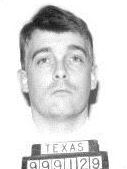
Robert Henry

Robert Loyd Henry, 41, was executed by lethal injection on 20 November 2003 in Huntsville, Texas for the murder of two women in their home.

On the 7 September 1993, the bodies of Carol Arnold, 57, and her mother, Hazel Rumohr, 83 were discovered inside their home in Portland. Both women had been severely beaten and stabbed. Arnold's cause of death was blunt trauma to the head. Rumohr's cause of death was a slashing stab wound across her chest. Arnold's body also had a rope attached to her leg.

Two months after the murders, Robert Henry, then 30, walked into the Corpus Christi police station and turned himself in. He told E. R. Frobish, an officer he knew, "I killed two people in Portland, and I want to turn myself in to you." He said that he killed the women after smoking marijuana. The soles of Henry's boots were matched to bloody footprints left at the crime scene. Rumohr's DNA was found in blood left in Henry's car, and Henry's blood was found inside the victims' home. The time of the murders was estimated as between midnight and 9:00 a.m. on 5 September.

Henry and Arnold's son had been friends during their teenage years, and Henry had regularly visited Arnold's home. He had maintained contact with Arnold and Rumohr over the years through Christmas cards.

At his trial, Henry pleaded innocent, despite his confession. A doctor testifying in his defense said that Henry panicked at the police station and told police whatever he believed would end the questioning quickly.

Paul Johnson, a co-worker of Henry's, testified that the day before Henry went to the police, they were watching a video together, and Henry told him, in tears, that he had "made his own bed and would have to lie in it."

The motive behind Arnold and Rumohr's murders was never clear. Prosecutors alluded to a possible connection to a bondage fetish, noting the rope that was found tied to Arnold's leg, plus Johnson's testimony that the video he and Henry watched together was an S&M video.

Henry had no previous criminal history.

A jury convicted Henry of capital murder in November 1994 and sentenced him to death. The Texas Court of Criminal Appeals confirmed his conviction and sentence in October 1996. All of his subsequent appeals in state and federal court were denied.

In a death-row interview, Henry denied any involvement in the murders. He said that the DNA evidence linking him to the murders was contrived by prosecutors working in tandem with his own lawyer. He also said that he never confessed to the murders, and that the confession that the Corpus Christi police had was manufactured. Henry also refuted Paul Johnson's testimony. "I kind of got suckered through the whole system," he told a reporter. "I've maintained through the whole appeals process that all I need is another shot. If I could have a second trial, I could have torn the case up."

Grant Jones, the lawyer who defended Henry at his trial, denied conspiring against him.

Henry said that his work, reviewing accident reports, often took him to the police department, where he said he heard conversations about the slayings. "I started having nightmares," Henry said. "I had a nervous breakdown."

Henry, who had previously been scheduled for execution in April 2002, viewed his upcoming execution as "kind of a relief." He said that he believed in reincarnation and that his spirit would take on another body. However, "I want to stay around," he added. "I've got family and friends. Even if you are in here, you can still see them," Henry said. "Once you're gone, that is pretty much it."

Henry declined to make a last statement at his execution. As the lethal injection was being administered, he smiled and nodded at friends and relatives, then mouthed "bye-bye. I love you. Here I go." He then blew them a kiss and immediately snorted and gasped as the drugs took effect. He was pronounced dead at 6:19 p.m.

Henry's execution was the first in Texas in ten weeks, and only the second in four months -- an unusually light schedule in a state where two or three executions per month is more typical. However, five more are currently scheduled for the first two weeks of December.


By David Carson. Posted on 24 November 2003.
Source: Texas Attorney General's office, Texas Department of Criminal Justice, Associated Press, Corpus Christi Caller-Times, Fort Worth Star-Telegram.