
Execution Report: Billy Vickers
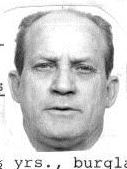
Billy Vickers
Executed on 28 January 2004
Billy Frank Vickers, 58, was executed by lethal injection on 28 January 2004 in Huntsville, Texas for the murder of a man during an attempted robbery.
On 12 March 1993, Phillip Kinslow, 50, drove home from the convenience store that he owned in Arthur City. In his truck, he carried a bag containing the day's receipts. He also carried a .38-caliber revolver. When Kinslow stopped to open the gate to his property, he was ambushed by Vickers, then 47, and Tommy Perkins, 40. Vickers was armed with a revolver. When Vickers demanded the money, he and Kinslow exchanged gunfire. Kinslow was hit once in the chest and twice in the right arm. He got back into his truck and drove toward the house. Kinslow's wife, Dania, hearing the gunfire, looked outside and watched her husband veer off the road and crash into a tree. Kinslow died of his wounds at a local hospital.
The next day, police received a report of a suspicious person about two miles from Kinslow's residence. Upon arrival, officers found Vickers walking with the help of makeshift crutches constructed from tree branches. He had been shot twice in the left leg. A bullet recovered from Vickers' knee was confirmed to have been fired from Kinslow's .38-caliber handgun. Investigators also found a hat and a roll of duct tape in a wooded area near Kinslow's gate. The hat contained some of Vickers' hairs. Upon searching Vickers' residence, police found several .22-caliber long rifle cartridges that were of the type that killed Kinslow.
At Vickers' trial, Jason Martin testified that he, Vickers, and Tommy Perkins had plotted to rob Phillip Kinslow. Martin testified that the three of them had gone to Kinslow's store on at least four occasions to prepare for the robbery, noting what time the lights were turned off and what time Kinslow left for home. On one occasion, they followed Kinslow home in order to discover where he lived. After a few more visits to Kinslow's property, they decided that the gate would be a good place for an ambush.
Martin testified that on the day of the murder, he drove Vickers and Perkins to Kinslow's property, dropped them off, and drove to a vacant lot. Their plan was for Vickers and Perkins to rush Kinslow at the gate, tie him up with duct tape, take the pickup, and drive to the vacant lot. There, they would take the money bag and leave the victim's truck, making their getaway in Martin's truck. Martin testified that he heard a gunshot and waited for Vickers and Perkins, but they didn't come. He drove around for hours trying to find them, but never saw either one of them. The next morning, Perkins came to Martin's house and told him that Kinslow had a gun and that he and Vickers shot each other.
Vickers had a lengthy criminal record, with convictions for burglary, arson, and aggravated assault with a deadly weapon. He had been in and out of prison four times.
Continued on Page 2