Texas Execution Information Center

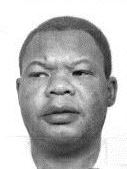
Kelsey Patterson

Kelsey Patterson, 50, was executed by lethal injection on 18 May 2004 in Huntsville, Texas for the murder of two people.

On 25 September 1992, Patterson, then 38, walked out of his home in Palestine to Oates Oil Company, which was about a block away. The owner, Louis Oates, 63, was standing on his loading dock when Patterson walked up behind him and shot him with a .38-caliber pistol. After shooting Oates, Patterson began walking away. Dorothy Harris, Oates' secretary, walked out of her office and onto the loading dock, saw Oates' body lying on the ground, and began screaming. Patterson returned and shot Harris, 41, in the head. Patterson then walked back home, told his roommate what he had done, laid down his weapon, and removed all of his clothing except his socks. When the police arrived, he was walking up and down the street, naked. He later explained that he removed his clothes because did not want police to think he was hiding a gun.

Patterson had been previously involved in two shootings. In May 1980, Patterson shot Richard Lane, a co-worker, for no apparent reason. In 1983, he shot another co-worker, Kevin Hughes, again for no apparent reason. On both occasions, Patterson was found incompetent to stand trial and was sent to a state mental hospital. He was diagnosed with paranoid schizophrenia. After receiving treatment and having his competency restored, the charges in both cases were dismissed because he was insane at the time of the shootings. Patterson was again admitted to a state mental hospital in 1988 after threatening his family. He was treated and released.

In pre-trial procedures for the double murder of Oates and Harris, a psychiatric expert examined Patterson and, testifying for the defense, declared him to be sane at the time of the murders and competent to stand trial. The jury also found Patterson competent to stand trial.

During both his competency hearing and his trial, Patterson testified that his actions were being remotely controlled via electronic devices implanted in him by his lawyers. He frequently complained about his lawyers and told them to "shut up." He was removed from the courtroom on several occasions for his disruptive outbursts.

Patterson had no prior felony convictions. He had misdemeanor convictions in 1985-86 for assault, carrying a weapon, and marijuana possession.

A jury convicted Patterson of capital murder in July 1993 and sentenced him to death. The Texas Court of Criminal Appeals affirmed the conviction and sentence in November 1995.

Most of Patterson's appeals questioned his competency to be executed because of his mental condition. A state appeals court held an evidentiary hearing on Patterson's competency claims in December 1997. The state court found that, although Patterson harbored delusions regarding implanted devices, he was capable of following rules, refraining from disruptive behavior, and communicating with his attorneys "when he chose to," and ruled him to be mentally competent. The court also found that Patterson's delusion of being under a "Hell pledge," meaning that he believed that the judges, prosecutors, and defense attorneys involved in his case were all conspirators from Hell, arose only after the murders were committed. The state court's decision was affirmed by the Court of Criminal Appeals in May 1998.

Patterson's lawyer then raised the competency claim in federal court. In January 2001, a U.S. district judge declared Patterson mentally competent. The U.S. Fifth Circuit Court of Appeals affirmed that decision in May 2003. In summary, all of Patterson's appeals were denied, including those based on other claims.

Under the law, a condemned prisoner is considered to be competent to be executed if he understands his crime and understands that he is going to be put to death. Patterson's lawyer, Gary Hart, told a reporter that his client was legally incompetent. He said that Patterson believed that the Hell court had granted him a full pardon, and was not aware that he was going to be executed. Hart said that Patterson had refused to speak with him for over seven years because he did not understand Hell law.

A lawyer from the Texas attorney general's office cited Patterson's frequent verbal and written claims of having received a stay of execution as evidence that Patterson understood his punishment.

On the day before his execution, the Fifth Circuit Court of Appeals rejected another appeal filed by Hart. However, the Texas Board of Pardons and Paroles, in a 5-1 vote, recommended to the governor that Patterson's sentence be commuted to life in prison.

On the day of the execution, both the U.S. Supreme Court and Governor Rick Perry declined to grant a stay. "State and federal courts have reviewed this case no fewer than ten times, examining his claims of mental illness and competency, as well as various other legal issues," Perry said in a statement. "In the interest of justice and public safety, I am denying the defendant's request for clemency and a stay."

A prison spokesperson said that Patterson refused to complete paperwork associated with the execution, such as choosing a last meal or selecting witnesses. She said that a tray of sandwiches and cookies was made available to him, and he accepted a candy bar and soft drink.

"Murderer ... no kin, no kin," Patterson mumbled while witnesses were entering the death chamber. "I'm not guilty of the charge of capital murder ... acquitted by the Court of Criminal Appeals." When the warden Patterson asked if he had a last statement, he replied "Statement to what? Statement to what?" He then rambled, "I'm not guilty of the charge of capital murder ... They're doing this to steal my money. My truth will always be my truth. No kin to you ... undertaker ... murderer. Go to Hell. Get my money. Give me my rights." After two minutes, the warden signaled for the lethal injection to be started. Patterson was pronounced dead at 6:20 p.m.

Patterson's case is only the third time since executions resumed in Texas in 1982 that the Board of Pardons and Paroles has recommended clemency to the governor. It is the first time that a governor has declined such a recommendation. Perry's decision was criticized by Patterson's lawyer and by mental health advocacy organizations, but friends and relatives of the two victims called it courageous.


By David Carson. Posted on 19 May 2004.
Source: Texas Attorney General's office, Texas Department of Criminal Justice, Associated Press, Houston Chronicle, Los Angeles Times, court documents.