
Execution Report: David Harris
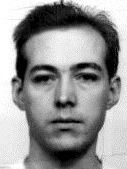
David Harris
Executed on 30 June 2004
David Ray Harris, 43, was executed by lethal injection on 30 June 2004 in Huntsville, Texas for murdering a man during an attempted kidnapping.
On 1 September 1985, Mark Mays, 30, and his girlfriend, Roxanne Lockard, 26, were asleep in Mays' apartment. Before dawn, Harris, then 24, broke into the apartment and entered the bedroom. He awakened the couple, and, armed with a .38-caliber pistol, ordered Mays into a bathroom. He then led Lockard out of the back door of the apartment at gunpoint and ordered her into his pickup truck, which was parked in a driveway behind the apartment complex.
While Harris was leaving with Lockard, Mays freed himself, grabbed a 9 mm pistol, and pursued Harris. A shootout ensued in front of Harris' truck. Both men fired five shots. Harris was hit in the neck and shoulder, while Mays suffered wounds to both shoulders, the chin, and chest. Lockard, who was unharmed, got out of the truck, saw Mays bent over in front of it, and ran inside the apartment complex to call for help. Harris got into his truck and drove away.
(No information was available on the prior relationship between Harris and his victims.)
At his trial, Harris testified that Mays fired the first shots. After he was hit in the neck and shoulder, he ducked behind the door of his truck and returned fire. He testified that after Mays stopped shooting, he ran in front of the truck, saw Mays on his hands and knees, and shot him one last time. Harris testified that he fired this last shot from about ten feet away, but a forensic pathologist testified that one of the fatal shots was fired from 12 to 24 inches away. Lockard testified that she could not tell who fired first, and that she did not see Harris when the gunfire erupted.
Harris had previous felony convictions in California for robbery, burglary, larceny, and other crimes. He was also found in possession of a deadly weapon while incarcerated in California. Harris had also been court-martialed and dishonorably discharged from the U.S. Army for a series of burglary and theft offenses.
A jury found Harris guilty of capital murder in April 1986 and sentenced him to death. The Texas Court of Criminal appeals affirmed the conviction and sentence in April 1989.
While Harris was on death row, new information came to light in an earlier murder case for which he had been arrested, but not charged. In 1976, Dallas police officer Robert Wood was shot and killed during a traffic stop. Harris, then 16, was arrested while driving the stolen vehicle that was involved in the murder. However, Harris accused Randall Dale Adams, a hitchhiker who he had met and given a ride earlier that day. The police believed Harris, and prosecutors granted him immunity for his testimony. Harris was the prosecution's chief witness at Adams' trial. Adams was convicted of capital murder and sentenced to death. In 1980, Adams' death sentence was commuted to life in prison after the U.S. Supreme Court ruled that some prospective jurors were improperly disqualified from his case.
Continued on Page 2