Texas Execution Information Center

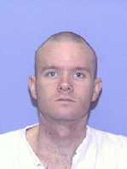
James Porter

James Scott Porter, 34, was executed by lethal injection on 4 January 2005 in Huntsville, Texas for the murder of a fellow prison inmate.

In 1995, Porter was convicted of murder with a deadly weapon and sentenced to 45 years in prison. He was sent to the Telford Unit in northeast Texas to serve out his sentence. On 28 May 2000, Porter, then 28, took a 2-pound rock that he had smuggled into the unit, and placed it inside a pillowcase. He then came up behind Rudy Delgado, 40, who was seated at a table in the day room, and struck him on the head with the rock. Delgado fell to the floor. Porter continued to strike Delgado repeatedly on the face and head. When the pillowcase ripped open, Porter stabbed Delgado with a makeshift knife. He then stomped on Delgado's head and face with steel-toed work boots until prison guards stopped the attack.

In a written statement, Porter confessed to killing Delgado. He stated that he had been planning to kill someone for some time, and had decided to use the rock and knife the week before the murder. He also stated that he took eleven Dilantin pills the night before the murder to help with the "rush of killing someone, no one in particular." Porter stated that he chose his victim at random.

Delgado was serving a 15-year sentence for sexually assaulting a child.

While awaiting trial, Porter wrote several letters, bragging about the murder. In a letter to James Elliott, the district attorney prosecuting his case, Porter stated that he should be applauded for ridding society of a child molester. In another letter, Porter wrote that he would murder again and didn't care whether his next victim was another prisoner or a corrections officer.

Porter's first felony conviction was in 1990, for burglary. He was sentenced to eight years' probation. In 1991, he was convicted again of burglary and sentenced to five years in prison. In 1995, while out on parole, he murdered a transient, a 40-year-old man, by shooting him twice in the head. In that case, he stated that he did society a favor. In 1998, while serving his murder sentence, Porter was convicted of possessing of a homemade knife.

At his capital murder trial, Porter stated outside the jury's presence that he wanted to be convicted and sentenced to death. He put on little defense. A jury convicted him of capital murder in March 2001 and sentenced him to death. The Texas Court of Criminal Appeals affirmed the conviction and sentence in April 2003. Porter's state appeals were exhausted in July 2003, and he opted not to pursue any federal appeals.

Porter's body was covered with tattoos expressing his allegiance to white supremacy groups. One tattoo spelled "HATE" on four fingers of his right hand. In an interview the week before his execution, Porter said that, as a child, he was raped by one of his stepfathers. He ran away from home at about age 14. He joined white supremacist groups because of their hatred of homosexuals.

In the death-row interview, Porter said that he killed Delgado because he made a pass at him. "Dude was a homosexual," Porter said. "[He] asked me several times if that was something I might dig. One day, frustration started eating on me, like a little old black shroud covering my eyes. I'm going to kill someone. I guess at that time I just lost all my cool and didn't care anymore."

Porter recalled the letters that he wrote to District Attorney Elliott, bragging about the murder. He said that at the time, he was proud of what he had done. "That dude never touched any little boys again," he said. But Porter also said that he realized he was wrong "to re-punish him for something he was already punished for."

"I'm sorry it happened," he said. "That's all I can say."

In an interview, Elliott said of Porter, "I think he was pretty well determined to get out of the system by murder, and that's what he did."

Porter said that he no longer considered himself a white supremacist. "I'm over that ... There's too much ignorance that comes with it."

Porter said that he found salvation while in prison, and that "although I don't deserve it," he was certain that he would go to heaven after his execution. "I know where I'm going. I know what's going to happen. I'm set. I'm secure in that and I'm at a real peace with it. I've never felt that kind of peace. And I like it, instead of all the hate, the chaos, the anger, and the aggravation I usually feel."

Porter did not pursue any final appeals, nor did he request clemency. "I'm the type of individual to face up to my responsibility and my mistakes," he said.

"I am sorry for the pain I have caused you," Porter said to the relatives of his victims at his execution. "I know it is a great loss, and I want to apologize. I am sorry. And to my family, I love you , and I will see you all in heaven." The lethal injection was then started. Porter was pronounced dead at 6:12 p.m.

Anna Acevedo, Delgado's sister, witnessed the execution. Afterwards, she told a reporter, "I believe he was taken out too easy. He didn't feel the same pain my brother did. I would have been happy to see him feel the same pain my brother felt. His apology wasn't good enough for me."


By David Carson. Posted on 7 January 2005.
Sources: Texas Attorney General's office, Texas Department of Criminal Justice, Associated Press.