|
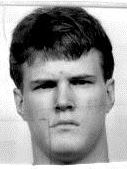
Troy Kunkle
Troy Albert Kunkle, 38, was executed by lethal injection on 25 January
2005 in Huntsville, Texas for the abduction, robbery, and murder of a
31-year-old man.
On 12 August 1984, Kunkle, then 18, and four companions - Aaron
Adkins, 19; Russell Stanley, 17; Kunkle's girlfriend, Lora Lee
Zaiontz, 18; and an unidentified person - drove together from San
Antonio to Corpus Christi. After visiting the beach, Adkins and
Stanley robbed a man of seven dollars at gunpoint at a convenience
store. The group then drove around looking for someone else to rob.
They spotted Steven Horton walking down the street, and offered him a
ride home. After Horton got in the front seat, Stanley put a
.22-caliber pistol to the back of his head and demanded his wallet.
Horton refused. Kunkle told Stanley to kill Horton, but Stanley
replied that it wasn't necessary. Kunkle then took the pistol from
Stanley, held it to Horton's head, and said, "We're going to take you
back here and blow your brains out." Adkins drove the car behind a
skating rink, where Kunkle shot Horton once in the back of the head.
They then pushed Horton's body from the car, and Zaiontz took his
wallet, which contained $13.
According to trial testimony, Kunkle said, "another day, another
death, another sorrow, another breath" after the killing. These words
are the refrain to "No Remorse," a song from Metallica's 1983 album
"Kill 'Em All." As the judge was listening to the album - which
depicts a pool of blood on the cover - Kunkle reportedly pretended to
play a guitar. He became known as the "No Remorse" killer.
A jury convicted Kunkle of capital murder in February 1985 and
sentenced him to death. The Texas Court of Criminal Appeals affirmed
the conviction and sentence in June 1986. Because Kunkle was
convicted before a 1996 federal law that sets limits on federal
appeals for criminal defendants was passed, his lawyers were able to
file numerous appeals for decades. All of them were denied, although
he did receive several stays of execution during his twenty years on
death row.
Lora Lee Zaiontz was convicted of capital murder and received a life
sentence. Information regarding her current status was unavailable
for this report. Aaron Allen Adkins and Jerry Russell Stanley were
convicted of murder and received 30 year sentences. Stanley served 6
years of his sentence, then was paroled in July 1990. Adkins was
paroled in February 1991. (At the time, early release was common in
Texas due to strict prison population caps imposed by U.S. District
Judge William Wayne Justice.) Both are still on parole as of this
writing. Stanley is scheduled to be discharged in 2014. Adkins is
scheduled for discharge in 2017.
In a 1996 interview from death row, Kunkle said that his life had been
transformed, thanks to prison ministers. "I get along better with
others, which I had a problem with in the past. ... I do think about
my victim every day."
As a previous execution date approached in July 2004, Kunkle's lawyers
files appeals claiming that the jury should have been instructed to
consider Kunkle's history of drug and alcohol abuse and his "troubled
and turbulent home environment." The U.S. Supreme Court issued a stay
of execution, but later declined to hear the case and rescinded the
stay.
In a 2004 death-row interview, Kunkle said that he didn't believe he
was given a fair trial, because the jury did not get a chance to hear
about his troubled childhood and abusive parents. He called his crime
a "juvenile mistake made with juvenile peer pressure." Kunkle said
that when his execution comes, "I'm hoping that I will be forgiven."
Stephen Horton's daughter and son-in-law came to Huntsville to witness
the execution. "I would like to ask you to forgive me," Kunkle told
them as he lay on the gurney. "I made a mistake, and I am sorry for
what I did. All I can do is ask you to forgive me." He then recited
the Lord's Prayer. As the lethal injection was being administered,
Kunkle repeatedly mouthed "I love you" to his friends and relatives.
He was pronounced dead at 8:12 p.m.

By David Carson. Posted on 26 January 2005.
Sources: Texas Attorney General's office, Texas Department of
Criminal Justice, Associated Press, Corpus Christi Caller-Times, San
Antonio Express-News.
|