|
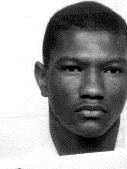
Ronald Howard
Ronald Ray Howard, 32, was executed by lethal injection on 6 October
2005 in Huntsville, Texas for the murder of a state trooper.
On 11 April 1992, Trooper Bill Davidson, 43, of the Texas Department
of Public Safety observed a vehicle with a broken headlight on U.S.
Highway 59 in Jackson County. He pulled the vehicle over for a
traffic stop. He called in the license plate and learned that the
vehicle, a 1986 GMC Jimmy, was stolen. As Davidson approached the
driver's window, the driver, Ronald Howard, then 18, shot him in the
neck. Howard then drove off.
At least eight people witnessed the shooting and provided a
description of the gunman. Trooper Davidson also described the
shooter. A pursuit by police ended when Howard lost control of the
vehicle and struck a house, then attempted to flee on foot. He was
arrested in possession of a loaded 9mm pistol. He confessed to
shooting Davidson, who died of his wound three days later.
Howard had previous convictions for burglary and theft. He was on
probation at the time of the murder.
Howard and his trial attorney said that his behavior was prompted in
part by violent, anti-police rap music. Howard told a grand jury that
he was listening to "Soulja's Story" by Tupac Shakur before the
shooting. In the song, a black teenager is pulled over by police and
opens fire:
They finally pull me over and I laugh
"Remember Rodney King?"
And I blast on his punk ass
Now I got a murder case.
A jury convicted Howard of capital murder in July 1993 and sentenced
him to death. The Texas Court of Criminal Appeals affirmed the
conviction in December 1996, but, finding that a prospective juror was
erroneously dismissed over her ability to impose a death sentence, it
reversed the death sentence and ordered a new punishment hearing. In
January 1999, Howard was again sentenced to death by a jury. The
Court of Criminal Appeals affirmed the death sentence in December
2001. All of his subsequent appeals in state and federal court were
denied.
In an interview from death row, Howard told a reporter that as he was
driving on U.S. 59, Davidson pulled along side of him, then sped off.
When Howard drove over a hill, Davidson was waiting for him on the
other side. Howard said that as he drove past, Davidson flipped on
his lights and pulled him over. "I felt like I was being taunted,"
Howard said.
"All my experiences with police have never been good,
whether I've been doing something bad or not," Howard continued. "That's what I think
played a major part. I assumed that this wasn't going to be a good
experience either." Howard said that Davidson asked him, "How you
doing?" as he approached him. "But I was already in motion. I'd
already shot as I hear him saying that."
In the interview, Howard did not say for certain that rap music was
responsible for his crime. "I'm not a psychologist," Howard said.
"So I don't know. I never said, 'yes it did' or 'no it didn't.' I
don't know. But my lawyers thought it could have caused it. And they
were trying to justify, put reason for what I did."
Howard's trial attorney, Allen Tanner, told a reporter the week before
Howard's execution, "He grew up in the ghetto and disliked police, and
these were his heroes ... these rappers ... telling him if you're
pulled over, just blast away. It affected him," Tanner said. That
was a totally valid, serious defense."
At the time of the shooting, Howard was an 18-year-old father of four
and was on probation for burglary. He told the reporter that he had
stolen "a lot of cars," but that was a normal activity for teenagers
in his Houston neighborhood. "When you think about people on death
row, you think of monsters - non-sociable people who can't help but
hurt other people," Howard said. "That's not who I am."
"I hope this helps a little," Howard told the victim's widow and two
children at his execution. "I don't know how, but I hope it helps."
He then expressed love to his friends and brother. As the lethal
injection was administered, Howard looked at his friends again and
mouthed, "I'm going home. I'm good. Be strong. I'll be alright." He
was pronounced dead at 6:24 p.m.

By David Carson. Posted on 7 October 2005.
Sources: Texas Attorney General's office, Texas Department of
Criminal Justice, Associated Press, Huntsville Item, court documents.
|