
Execution Report: Robert Salazar
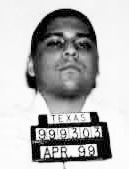
Robert Salazar
Executed on 22 March 2006
Robert Madrid Salazar Jr., 27, was executed by lethal injection on 22 March 2006 in Huntsville, Texas for the murder of a 2-year-old girl.
On 23 April 1997, Raylene Blakeburn of Lubbock went to work, leaving her boyfriend, Robert Salazar, then 18, to babysit her 2-year-old daughter, Adriana Gomez. While her mother was gone, Adriana began crying, and Salazar could not make her stop. Salazar beat the child repeatedly on the head, chest, and stomach. After Adriana lost consciousness, Salazar put her in her crib, then he and a friend went out to get beer.
Blakeburn returned home from work at about 5:00 p.m. and found her daughter unconscious, breathing abnormally, and bleeding from her mouth. She called paramedics. When the paramedics saw the extent of the child's injuries - bruises, twisted limbs, and a head that felt "like Jello" - they called the police. Adriana died in a hospital at about 7:45 that evening.
In a written statement to police, Salazar said that he was taking a shower with Adriana when she started crying and would not stop. (He said that he had babysat for Adriana before, and was aware that she did not like showering with him.) He stated that he became angry with her, and pushed her with the back of his hand, causing her to fall down and hit her head on the bathtub. He said that he abandoned her afterward because he was scared. "I did not mean to hurt Adriana," he stated. "I don't want people to think I'm a bad person for what I did."
At Salazar's trial, Roger Torres testified that at about 4:00 p.m., he was walking home from work when Salazar drove up to talk to him. Torres testified that Adriana was not with him. Salazar asked Torres to look at his fan belt. After looking at the car, the men drove to a nearby store to buy beer. Torres testified that he noticed that Salazar's shirt had a number of small stains, which appeared to be blood. When they returned from the store, they drove by Blakeburn's house and, seeing the ambulance, did not stop, but proceeded to Salazar's mother's house. Once at his mother's house, Salazar changed his shirt, and he and Torres drank beer. Salazar then received a phone call from Blakeburn. Torres testified that Salazar told Blakeburn not to tell the police that he had been watching Adriana. He also told Torres that the matter was none of his business and to be quiet about it.
A pathologist testified that Adriana suffered from multiple blunt force trauma wounds that were inconsistent with being pushed or falling in the bathtub. In addition to the back of her head being caved in, he testified that her chest injuries were worse than he had seen in any auto accident victim, that her eyes were injured from being struck or shaken - enough to blind her, had she lived - and that she had also been hit in the face. She also had bruises on her neck. The pathologist also testified that Adriana had vaginal injuries that were consistent with sexual penetration.
Continued on Page 2