
Execution Report: Angel Maturino Resendiz
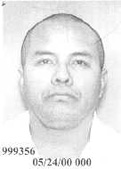
Angel Maturino Resendiz
Executed on 27 June 2006
Angel Maturino Resendiz, 45, was executed by lethal injection on 27 June 2006 in Huntsville, Texas for the robbery and murder of a 39-year-old woman.
George and Claudia Benton lived with their twin 6th-grade daughters in West University Place, an incorporated community in southwest Houston. Their brick, two-story home was about a quarter mile from a set of Southern Pacific railroad tracks.
On the afternoon on 16 December 1998, George Benton and the girls departed to visit some relatives in Arizona. Claudia, a clinical geneticist at the Baylor College of Medicine, stayed home to make a presentation the next day. Some time after midnight, Resendiz, then 38, slipped in through an unlocked door and went upstairs, where Benton was sleeping. Resendiz sexually assaulted Benton, then stabbed her to death and beat her with a 2-foot-tall bronze statuette he picked up in the house. Resendiz stole some money, some ivory figurines, jewelry, electronic gear, and a meat cleaver, and fled in the victim's jeep.
Police found the victim face down on the floor, her head partially enclosed in a plastic bag, her torso covered with blankets. Her right arm was broken, and bones in her face were shattered.
The victim's jeep was later recovered in San Antonio. Fingerprints found on the steering column matched those of Rafael Resendez-Ramirez, an illegal alien from Mexico who was suspected in a number of other killings across the country. Resendez-Ramirez - one of Resendiz's many aliases - was dubbed the "Railroad Killer" because all of his killings occurred near the railroad tracks that he used to traverse the country. The railroad killer beat most of his victims to death with objects that were found at hand. A majority of his victims were women, and many of those were sexually assaulted. Cars stolen from the victims typically turned up in San Antonio.
By the summer of 1999, a nationwide manhunt was on. On 2 June, the U.S. Border Patrol apprehended Resendiz near El Paso as he was attempting to cross the border illegally. The agents were unaware who he was. The Immigration and Naturalization Service (INS) performed a fingerprint and photo check against known fugitives, but no matches were found, so he was deported back to Mexico. (An investigation later showed that the West University Place police department alerted the INS about Resendiz back in December, right after Claudia Benton's murder.)
The Federal Bureau of Investigation then placed Resendiz on their Ten Most Wanted list, with a reward of $50,000 for information leading to his capture. The reward escalated to $125,000 after a few days.
The FBI tried to get information from Resendiz's half-sister, Manuela Karkiewicz, who lived in Albuquerque, New Mexico, but she refused to cooperate. Eventually, Sergeant Drew Carter of the Texas Rangers persuaded Karkiewicz to talk Resendiz into surrendering. Resendiz turned himself over to Carter on the international bridge in El Paso on 13 July 1999.
Resendiz confessed to and/or was charged with over a dozen murders in Texas, Florida, Georgia, Illinois, and Kentucky, and was considered the leading suspect in several other murders that were never solved.
Fingerprints, DNA, and stolen items recovered from Resendiz's home in Mexico tied him to the Benton killing. Resendiz pleaded not guilty by reason of insanity. His defense counsel presented evidence that he was a paranoid schizophrenic who suffered delusions of being half angel, half man, and who was forced to kill his victims through God's will. Prosecutors presented testimony that Resendiz was able to discern right from wrong.
Resendiz had a prior conviction in Florida for burglary, vehicle theft, and aggravated assault. He was sentenced to 20 years in prison. He was paroled in August 1985. He was also convicted in New Mexico of burglary and sentenced to 18 months in prison. He was paroled in April 1993. He also served jail time in Missouri and California. Resendiz was deported 17 times and had several convictions for falsifying immigration documents. He traveled under as many as 30 false names.
A jury convicted Resendiz of capital murder in May 2000. The Texas Court of Criminal Appeals affirmed the conviction and sentence in May 2003. All of his subsequent appeals in state and federal court were denied.
Here is a list of the murders Resendiz is believed to have committed:
1. Bexar County, Texas (east of San Antonio) - In 1986, an unidentified homeless woman was shot four times with a .38-caliber weapon. Her body was dumped in an abandoned farmhouse. Resendiz stated that he met the woman at a homeless shelter. They took a motorcycle trip together, bringing a gun along to fire for target practice. Resendiz said that he killed the woman for disrespecting him.
2. Bexar County, Texas - Resendiz stated that soon after killing the homeless woman, he killed her boyfriend - a Cuban - and dumped his body in a creek somewhere between San Antonio and Uvalde. Resendiz said that he killed the man because he was involved in black magic. This man's body has never been found, and nothing is known about him except what Resendiz told authorities. Resendiz confessed to these first two murders in September 2001, in hopes that doing so would speed up his execution.
3. San Antonio (Bexar County) - On 19 July 1991, the body of Michael White, 22, was found in the front yard of an abandoned downtown house. Resendiz also confessed to this murder in September 2001. He drew a map of the crime scene and said that he killed White because he was homosexual. Police concluded in April 2006 that Resendiz did in fact kill White.
4 and 5. Belleview, Florida - On 23 March 1997, the body of Jesse Howell, 19, was discovered near railroad tracks. Resendiz later directed authorities to the remains of Howell's traveling companion, 16-year-old runaway Wendy Von Huben. Von Huben's remains were hidden about 15 miles away, near Ocala. Resendiz confessed to these murders under the condition of immunity.
6. Colton, California - In July 1997, an unidentified transient was beaten to death in a rail yard. Resendiz is considered the prime suspect in this case.
7. Lexington, Kentucky - On 29 August 1997, Christopher Maier, 21, was killed when he and his girlfriend, Holly Dunn, took a shortcut along railroad tracks on their way to a party. After robbing both victims, Resendiz bound and gagged Maier, then beat him on the head with a large object. Resendiz then raped Dunn and hit her on the head with a large object. Dunn survived and testified against Resendiz at his punishment hearing for the Benton murder. Resendiz was charged in the Maier murder and in all of the subsequent cases on this list.
8. Hughes Springs, Texas - On 2 October 1998, Leafie Mason, 87, was found beaten to death with her antique iron. From this point on, all of Resendiz's known crimes occurred inside homes.
9. Carl, Georgia - On 11 December, Fannie Byers, 81, was found bludgeoned to death in her home. Charges were dropped against another man and filed against Resendiz after Resendiz provided key information.
10. West University Place, Texas - On 17 December 1998. Claudia Benton was sexually assaulted, stabbed, and beaten to death in her home.
11 and 12. Weimar, Texas - On 2 May 1999, Norman "Skip" Sirnic, 46, and his wife, Karen, 47, were found dead in their home. Their heads were crushed with a sledge hammer while they slept. Mrs. Sirnic was also sexually assaulted. The bodies were covered with blankets. The couple's truck turned up in San Antonio three weeks later.
13. Houston - On 4 June 1999, Noemi Dominguez, 26, was sexually assaulted and killed with a pickaxe in her home. Her car was also stolen.
14. Schulenberg, Texas - After killing Dominguez, Resendiz drove her car to Schulenberg. There, he killed Josephine Konvicka, 73, on 4 June in her rural home with the same pickaxe used to kill Dominguez. The pickaxe was left embedded in Konvicka's head. The crime scene was only about 3½ miles from the Sirnic double murder. In a back room, police found two items believed to be left behind by the killer as "calling cards" - a Schulenberg newspaper containing an article about his crimes, and a toy train. Dominguez's car was found at the international bridge in Del Rio on 11 June.
15 and 16. Gorham, Illinois - On 15 June 1999, the bodies of George Morber, 80, and his daughter, Carolyn Frederick, 51, were found in their rural home. Morber was tied to a chair and shot in the back of the head with a shotgun he kept in the house. Frederick was sexually assaulted and struck over the head with the shotgun, which broke into two pieces.
In addition to the above crimes, San Antonio police detective George Saidler said that Resendiz told him he committed two more murders that he would take to his grave. Some authorities also believe that Resendiz committed murders in Mexico, particularly in Ciudad Juarez, where many bodies - mostly women - were found by railroad tracks.
Continued on Page 2