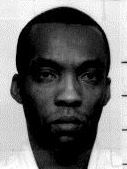
Texas Execution Information Center

Farley Matchett

Farley Charles Matchett, 43, was executed by lethal injection on 12 September 2006 in Huntsville, Texas for the robbery and murder of a man in his home.

On 10 July 1991 in Huntsville, Matchett, then 28 and addicted to crack cocaine, beat Ola Mae Williams, 91, on the head with a hammer after she refused to give him money for drugs. The following day, Matchett beat Melonee Josey, 74, on the head after she refused to give him money. Matchett then stole Josey's car and drove it to Houston. Williams suffered permanent brain damage in the attack. Josey died.

On 12 July, Matchett appeared at the Houston home of Uries Anderson, a relative by marriage. Instead of giving Matchett money, Anderson gave him a lecture about his drug habit. Matchett then stabbed Anderson twice in the back and beat him on the head with a hammer. Anderson's body was found two days later. Matchett was arrested when he tried to forge and cash one of Anderson's personal checks. He confessed to all three attacks to Houston police.

Matchett had no prior felony convictions, but he did have a history of drug abuse and minor offenses. He was discharged from the U.S. army in 1981 for being absent without leave, fighting with another soldier, and possession of marijuana. In 1989, he was convicted of marijuana possession and sentenced to 6 months' probation. He was also enrolled in a drug and alcohol program for his $600-a-day habit, but he never showed up for treatment after his first visit. He also had a conviction for marijuana possession and theft in May 1990 and was sentenced to 6 months' probation.

Matchett pleaded guilty to all three attacks. He received a 99-year sentence for the Williams beating, and a life sentence for the Josey murder. In April 1993, a jury sentenced him to death for the Anderson murder. The Texas Court of Criminal Appeals affirmed the conviction and death sentence in November 1996. All of his subsequent appeals in state and federal court were denied.

While on death row, Matchett wrote a letter that was published on several anti-death-penalty web sites. In the letter, Matchett claimed he killed Anderson in self-defense. He went to Anderson's house because Anderson owed him money, he wrote. "I made inquires as to when he was going to settle the 8-month-old debt and at that point, the man became angry," Matchett wrote. "I could see the situation escalating, so I made an attempt to leave, but I was abruptly stopped at the door by the victim who spun me around and struck me with his fist." Matchett wrote that he and Anderson fought, then Anderson grabbed a knife and attempted to slash his throat. Matchett was able to push the knife away, lodging it in Anderson's chest. According to Matchett's letter, he called paramedics, and Anderson died in surgery.

Matchett also claimed that the police literally beat a confession out of him and led his hand in signing it. He wrote that he pleaded guilty after his lawyer, Donald Davis, assured him that the death penalty was off the table. Matchett also implied that Davis's June 2000 suicide was the result of another lawyer's discovery of Davis's role in a conspiracy to convict him.

Harris County Assistant District Attorney Roe Wilson said that there was never a deal to spare Matchett from the death penalty, and that the questions asked of prospective jurors during the jury selection process should have made that obvious.

In an interview from death row the week before his execution, Matchett admitted that he "binge smoked" on weekends. "You couldn't get me to do nothing on the weekend," he said, smiling. He said that his court-ordered drug treatment programs weren't right for him, because they didn't use medication to help him overcome his addiction. With the right program, "I wouldn't be in this situation," Matchett said.

In his last statement at his execution, Matchett expressed love to his family and asked Anderson's family for forgiveness. He was pronounced dead at 6:16 p.m.


By David Carson. Posted on 13 September 2006. Age correction made on 5 November 2006.
Sources: Texas Department of Criminal Justice, Houston Chronicle, Huntsville Item, ccadp.org.