Texas Execution Information Center

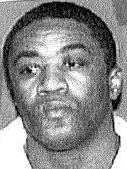
Lonnie Johnson

Lonnie Earl Johnson, 44, was executed by lethal injection on 24 July 2007 in Huntsville, Texas for the murder and robbery of two teenage boys.

On 15 August 1990, Leroy "Punkin" McCaffrey, 17, and Gunar "Sean" Fulk, who was also known as "Bubba," 16, approached Johnson, then 27, at a convenience store in Tomball in north Harris County. The boys agreed to give Johnson a ride.* The boys' bodies were found later that morning on the side of the road, about four miles away. Fulk was shot three times in the head and once in the chest. McCaffrey was found entangled in a fence about 350 feet away. His spinal cord was severed by a single gunshot. A knife was in his hand.

Following the killings, Johnson stole Fulk's truck and drove to Austin to visit his girlfriend. He later abandoned the truck in San Marcos, between Austin and San Antonio. He traded the gun used in the killings for cocaine. He was arrested in Austin on 29 August. At the time of his arrest, Johnson claimed that he killed the youths in self-defense. He maintained this position throughout his trial and appeals.

Prosecutors said that Johnson pulled the gun and forced the boys out of the pickup. He shot Fulk multiple times, but McCaffrey was able to run away. Johnson chased him and caught up with him as he tried to make his way through a fence, then shot him.

Johnson had a history of violent behavior. At age 17, he punched his girlfriend in the face on one occasion, and struck her with a brick on another occasion. Another girlfriend testified that he struck her in the face and stole her car. At the time of the capital murder, he was on probation for a misdemeanor conviction for assaulting a female relative. He also had previous convictions for burglary and larceny.

While in jail awaiting his capital murder trial, Johnson assaulted fellow inmates on three separate occasions: hitting one, striking another in the lip with a pen, and breaking a broom handle on another one's head.

A jury convicted Johnson of capital murder in November 1994 and sentenced him to death. The Texas Court of Criminal Appeals affirmed the conviction and sentence in April 1997. All of his subsequent appeals in state and federal court were denied.

"I am innocent by reason of self-defense," Johnson said in an interview from death row the week before his execution. "The only difference between me and James Byrd Jr. is that I lived," he said. Byrd was a black man who was dragged to death behind a pickup truck in Jasper County in 1998. Juries found three white men guilty of capital murder in Byrd's killing. Two were sent to death row, and the third was given a life sentence.

Johnson said that after he got in the pickup, McCaffrey and Fulk drove him to a remote location, where they forced him from the truck at gunpoint, urinated on him, and threatened to kill him. When the teens relaxed their guard, Johnson said, he wrestled with the pair to grab the pistol, and they were shot. "You do what you have to do," Johnson said. "If I could have run, I'd have done that."

He admitted stealing the pickup truck and trading the gun for drugs after the killings. "I did a few knucklehead things. When things like this are going on, you're not going to think clearly. I was not thinking clearly."

Johnson also said that the assaults he committed in the Harris County Jail were for his own safety.

Johnson's execution was delayed for about 30 minutes as the U.S. Supreme Court considered his final appeal. In his last statement, Johnson expressed love to his friend, Carrie Christensen, who watched from an adjacent room. He did not acknowledge his victims' relatives, who were watching from another room. The lethal injection was started, and he was pronounced dead at 6:30 p.m.

"A beautiful soul was killed today," Christensen said after the execution. "His only crime was to defend himself against racist aggressors." Both of the victims' mothers denied that their children were racists.

Johnson was the 100th prisoner from Harris County to be executed since capital punishment resumed in 1982 following a nationwide moratorium. The occasion was marked by about a half-dozen anti-death-penalty protestors, who stood on the sidewalk outside District Attorney Chuck Rosenthal's home for about an hour Tuesday evening.


By David Carson. Posted on 25 July 2007. *Edited on 24 November 2007.
Sources: Texas Department of Criminal Justice, Texas Attorney General's office, Associated Press, Houston Chronicle.