
Execution Report: Johnny Conner
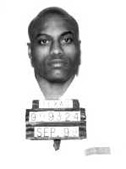
Johnny Conner
Executed on 22 August 2007
Johnny Ray Conner, 32, was executed by lethal injection on 22 August 2007 in Huntsville, Texas for the murder of a convenience store owner in an attempted robbery.
On 17 May 1998, Conner, then 23, entered a north Houston convenience store at night and brought a drink to the counter, as if to buy it. The store owner, Kathyanna Nguyen, 49, was behind the counter, which was enclosed with bulletproof glass, but had a small opening used to pass items to and from customers. Conner then produced a .32-caliber revolver and, inserting his hand in the opening, pointed the gun at Nguyen. Just then, Julian Gutierrez walked into the store to pay for gasoline he had pumped. Gutierrez testified that he heard someone say, "Give me all your money," and that he looked up from counting his money and saw a man pointing a gun at Nguyen. Conner then turned and pointed the gun at him. Gutierrez then dropped the money he was holding and ran from the store. Conner fired one shot, striking Gutierrez in the chest and arm. He then fired two shots into Nguyen's head. He then fled from the scene, leaving behind the money Nguyen had left for him.
Police found a juice bottle on the floor near the counter. Two fingerprints were found on it. One belonged to Conner; the other was not identified.
Several people who were outside the store saw a man running from the grocery store. Although their descriptions of the man's appearance and clothing varied, three eyewitnesses, including Gutierrez, identified Conner as the robber from a photo lineup. Conner turned himself in to the Harris County Jail on 17 June.
At Conner's trial, Gutierrez testified that after he was shot once, he heard several more gunshots. He turned to see the robber shooting at Nguyen. He testified that the robber wore white tennis shoes, brown shorts, a white t-shirt, and a red cap.
Tony Tostado, who lived with Nguyen and operated a restaurant next door to her store, testified that he ran over to the store after hearing gunshots. Upon entering the store, he saw a man with a gun. Tostado testified that he tried to grab the man, but he got away. He then saw Nguyen on the floor, bleeding profusely. He called 911 on the pay phone outside the grocery store. While he was on the phone, he saw the fleeing suspect, who was not wearing a hat.
Agnes Hernandez testified that she was in her vehicle, stopped at a nearby intersection, when she saw a black man wearing a white shirt and dark shorts and no hat running with his hand under his shirt. She said that he ran quickly for about a block, then got in a vehicle and drove away. She followed the suspect, who nearly ran over a man and child as he sped away, until he reached the freeway. She then drove back to the store.
Christine Flores testified that she was driving in the area, saw a man running in the street, and had to slow down to avoid hitting him. She testified that the man, who she identified as Conner in a photo lineup, looked directly at her. He was wearing blue jeans and no hat. She also stated that the man did not have a tattoo (Conner had a teardrop tattoo on his right cheek).
Michael Hamilton and Martha Meyers were driving near the scene when a man ran from the store and crossed in front of them. Meyers testified that the suspect was between 5' 10" and 6' 1" (Conner was 5' 7"), wore blue shorts and long pants, a light gray t-shirt, and a white Nike cap. She also stated that he had no tattoo on his face. Meyers testified that she and Hamilton followed Hernandez as Hernandez followed the suspect. Meyers identified Conner as the suspect in a photo lineup.
Melecio Sanchez testified that he was sitting in a nearby bar when he heard two gunshots. He saw a black man wearing a white shirt, dark shorts, and blue cap running out of the store.
Conner's lawyers argued that the fingerprint on the orange juice bottle did not mean he was at the store when the crime occurred. They pointed out that the bottle did not appear in photos of the crime scene taken by police.
Conner had a criminal history of trespassing, drug possession, assault, and robbery going back to the age of ten. He also had a history of domestic violence as an adult. Former girlfriend Tamara Ekanem testified that in May 1995, Conner choked her and hit her with a stick, and a year later, threatened to kill her. Linda Gaspar testified that Conner hit or slapped her on three occasions between August 1996 and April 1997.
Continued on Page 2