Texas Execution Information Center

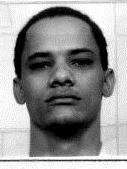
Michael Richard

Michael Wayne Richard, 48, was executed by lethal injection on 25 September 2007 in Huntsville, Texas for the rape, robbery, and murder of a woman in her home.

On the afternoon of 18 August 1986, Richard, then 26, was in front of the Hockley home of Marguerite Dixon, 53. Richard approached Dixon's son, Albert, and asked if the van parked in the driveway was for sale. When Albert Dixon told him the van belonged to his brother who was out of town, Richard left.

A few minutes later, Richard saw Albert and his sister, Paula, leave the property. Richard then entered Mrs. Dixon's home. He forced her into a bedroom, where he raped her. The then shot her in the head with a .25-caliber pistol. He then stole two televisions and the van.

Mrs. Dixon's children returned home that evening. They found the sliding-glass door open and all the lights turned off. After calling a neighbor for assistance, they entered the house and discovered their mother dead in her bedroom.

Richard hotwired the van and drove it to Houston. He traded the murder weapon to a friend for cocaine and attempted to sell the televisions. He then drove the van to another home, where it broke down. He told the homeowner, a friend of his, that he would return for the van, but he never did. The homeowner called a wrecker the next morning to take the van away. When it was discovered that the van had been hotwired and stripped, the police were called. After interviewing the homeowner and the man to whom Richard had tried to sell the televisions, the police obtained an arrest warrant for Richard. He was arrested at his mother's home the next evening.

Richard admitted being involved in Dixon's death and helped police track down the murder weapon. His fingerprints were also found on the sliding-glass door to the victim's home. He claimed that the gun discharged accidentally.

Richard had previous served parts of two prison sentences for home burglary. In March 1978, he was sent to prison on a 6-year sentence. He was paroled in May 1981. In January 1985, he was returned to prison on a 5-year sentence. He was paroled in June 1986, about two months before Dixon's murder.

A jury convicted Richard of capital murder in September 1987 and sentenced him to death. In September 1992, the Texas Court of Criminal Appeals overturned his conviction because the jury was not instructed to consider his history as an abused child as a possible mitigating factor when determining his punishment. In a new trial in June 1995, a jury again convicted Richard of capital murder and sentenced him to death. The TCCA affirmed this conviction and sentence in June 1997. All of his subsequent appeals in state and federal court were denied.

At Richard's first trial, his attorneys told the jury that he scored 62 on an IQ test. Richard's IQ and possible mental retardation were not mentioned in his second trial. After the U.S. Supreme Court ruled in June 2002 that executing mentally retarded prisoners is unconstitutional, a hearing was held on Richard's mental retardation claim. A psychologist for the state, George Denkowski, reviewed Richard's IQ tests and determined him to be retarded. However, Harris Country officials succeeded in obtaining a new hearing in December 2006. Prosecutor Lynn Hardaway supplied evidence showing that Richard's activities in prison - including writing letters and playing chess - showed that he was not retarded, and that he had never been diagnosed as retarded during his childhood. Denkowski then changed his evaluation, stating that a low IQ test was not conclusive by itself.

The courts ruled that Richard's claim of mental retardation was not proven, and rejected his appeals.

Richard later denied any involvement in the killing. "I was a thief - I ain't gonna lie to you," he told an interviewer on death row the week before his execution, "because that's what I was taught by my father. But I've been trying to tell everybody I didn't break in that house or kill that woman." He said that a detective tricked him into signing a document he could not read.

Lee Coffee, the prosecutor in Richard's first trial, and who is now a judge in Memphis, Tennessee, said that Richard never denied the killing during his trial. Coffee also said that, at the Dixon family's request, he offered Richard a life sentence, but Richard rejected the plea offer.

Richard said that he accepted the plea offer, but Coffee reneged on his promise.

As for his mental retardation claim, Richard said that the state's evidence against him was misleading. He said that he had others write letters for him, then he copied them in his own handwriting, and that he merely imitated behavior he saw others doing. "There's a lot of things I can't do, but if I sit and watch you, I can learn to do a little," he said.

On the day Richard was executed, the U.S. Supreme Court agreed to hear a Kentucky case challenging the constitutionality of execution by lethal injection. Richard's lawyers asked the Supreme Court to grant a stay in his case until the Kentucky case is decided, but their request was denied a few minutes before 8:00 p.m.

At his execution, Richard expressed love to his family in a brief last statement. After the lethal injection was started, he said, "I guess this is it." He was pronounced dead at 8:23 p.m.


By David Carson. Posted on 26 September 2007.
Sources: Texas Department of Criminal Justice, Texas Attorney General's office, Houston Chronicle.