|
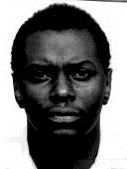
Michael Riley
Michael Lynn Riley, 51, was executed by lethal injection on 19 May
2009 in Huntsville, Texas for the murder and robbery of a convenience
store clerk.
On 1 February 1986, Riley, then 27, entered a convenience store in
Quitman in northeastern Texas, carrying a concealed butcher knife.
Riley was a frequent customer in the store. Clerk Wynona Harris, 23,
told him to help himself to the ice cream he wanted while she counted
some money. While Harris had her back turned to Riley, he came up
behind her and stabbed her to death. He left the store with a cloth
bag containing $1,110 in cash. A customer came in later and found
Harris's body behind the counter. She was stabbed 31 times.
A set of bloody footprints led from the store in the direction of
Riley's home a few blocks away. Detectives followed the footprints and
found the murder weapon and a money bag. Later that day, Riley, who
had several felony and misdemeanor convictions and was well-known to
law enforcement authorities in Quitman, went to the Wood County
sheriff's office after hearing that authorities were looking for him.
Riley indicated that he knew something about the murder, but he denied
being at the store that morning. He was allowed to leave the sheriff's
office, but after a milk delivery driver informed authorities that he
had spotted a man in distinctive coveralls hanging around outside the
store that morning, he was brought back in for questioning. Riley then
led authorities to a pair of bloodstained coveralls hidden under some
brush in a field near his house. In one of the pockets was $970 in
cash. He then confessed to the crime.
Riley had prior felony convictions and two prior prison sentences. In
March 1977, he was sentenced to 2 years in prison for burglary and
larceny. He was discharged in November 1978. In January 1980, he was
sentenced to 9 years for burglary of a building. He was paroled in
July 1983 and discharged in July 1985. He also had several convictions
for forgery and writing bad checks.
A jury convicted Riley of capital murder in November 1986 and
sentenced him to death. The Texas Court of Criminal Appeals overturned
the conviction in November 1993 on the grounds that a potential juror
was improperly struck from the jury. At his second trial, Riley
pleaded guilty. A jury then convicted him again of capital murder in
September 1995 and resentenced him to death. The Texas Court of
Criminal Appeals affirmed the conviction and sentence in May 1997. All
of his subsequent appeals in state and federal court were denied.
Several of Riley's appeals asserted that he was mentally retarded and
thus ineligible for capital punishment. In 1973, he was evaluated as
having an I.Q. of 67, which is considered a borderline retardation
level. This evaluation was admitted at his first trial. In preparation
for his second trial, his attorney, William Wright, interviewed
Riley's family and examined his school, probation, and juvenile
records. Based on this evaluation and his own personal observations of
his client, Wright concluded that Riley was not retarded, and he
decided not to present the 1973 evaluation into evidence, because he
believed doing so could be counterproductive to his trial strategy.
Wright also consulted with Dr. Patrick Lawrence, a psychologist, about
Riley's mental state. Lawrence evaluated Riley and testified at his
trial that he did not pose a future danger to society, but he did not
testify as to Riley's I.Q. In March 2004, the U.S. Fifth Circuit Court
of Appeals ruled that Wright's actions were reasonable, and did not
constitute ineffective assistance of counsel.
In an interview from death row the week before his execution, Riley
said that he turned to crime to support his gambling habit. "Dice took
my life," he said. "It's the worst drug habit you can have."
Riley said he was remorseful for his actions and held no ill will
toward the jurors or prosecutors who sent him to death row. He also
said that he had asked his friends not to pray for him to receive a
reprieve. "They're freeing me from this place," he told a reporter.
"I'm in Heaven. I can already feel it. Come May 19th, I'll be free."
"I know I hurt you vary bad," Riley said to his victim's family
members who attended his execution. "I truly am sorry for the hurt and
pain I caused you." He also apologized to his mother, who did not
attend, for not being the son she wanted him to be. He reminded his
friends and supporters that he was ready to die. He concluded his last
statement by urging this fellow death row inmates to "stay strong".
Using his death row nickname, he said, "Fleetwood is out of here." The
lethal injection was then started. He was pronounced dead at 6:18 p.m.

By David Carson. Posted on 20 May 2009.
Sources: Texas Attorney General's office, Texas Department of
Criminal Justice, court documents, Associated Press.
|